
Ibuprofen Gel
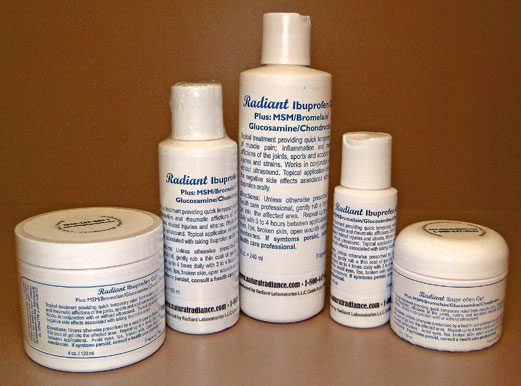
Price: $25 + tax
Common uses
- Muscle pain
- Rheumatic pain
- Back pain
- Sprains, strains and sports injuries
- Severe throbbing or stabbing pain that runs along a nerve and through the area that nerve supplies
- Pain from non-serious arthritic conditions
Ibuprofen Gel combines Ibuprofen USP, MSM (Dimethyl Sulfone), Bromelain 600, Glucosamine, Chondroitin and Ketoprofen in a proprietary system designed to deliver them through the skin.
Ibuprofen is a proven option for relieving pain and inflammation. Its drawback is that taking it by mouth has been documented to cause stomach ulcers, and it can lead to kidney and liver damage.
For years, people in Europe have used “topical” ibuprofen to get its benefits without these side effects. Topical ibuprofen absorbs quickly through the skin and goes straight to the affected area, with only a very small amount reaching the bloodstream.
How the Gel Works
The active ingredient in Ibuprofen Gel is ibuprofen, a medicine in the class known as non-steroidal anti-inflammatory drugs (NSAIDs). Ibuprofen is a straightforward pain reliever used to ease mild to moderate pain and inflammation.
It works by blocking the action of a substance in the body called cyclo-oxygenase (COX). COX plays a part in making several chemicals in the body, including some known as prostaglandins. The body releases prostaglandins in response to injury and certain diseases and conditions, and they cause pain, swelling and inflammation. Because ibuprofen blocks the production of prostaglandins, it helps reduce inflammation and pain.
When ibuprofen is applied to the skin (topical use), it passes through the skin into the tissues underneath, where it eases pain and inflammation in that area. This gel can be used to help relieve pain from muscle and joint conditions such as sprains, strains, back pain, rheumatism and minor arthritic conditions. Massage it gently into the affected area.
Less ibuprofen reaches the bloodstream from products applied to the skin than from those taken by mouth. Even so, some can still be absorbed, especially when large amounts are used over large areas.