
Spinal Degeneration
Spinal degeneration
How spinal discs wear over time
Degeneration is the gradual wear of the discs and joints that let your spine bend and twist. It usually develops slowly over years, and many people have no symptoms in the early stages. Step through the stages to see what changes inside a spinal segment.
Starting point
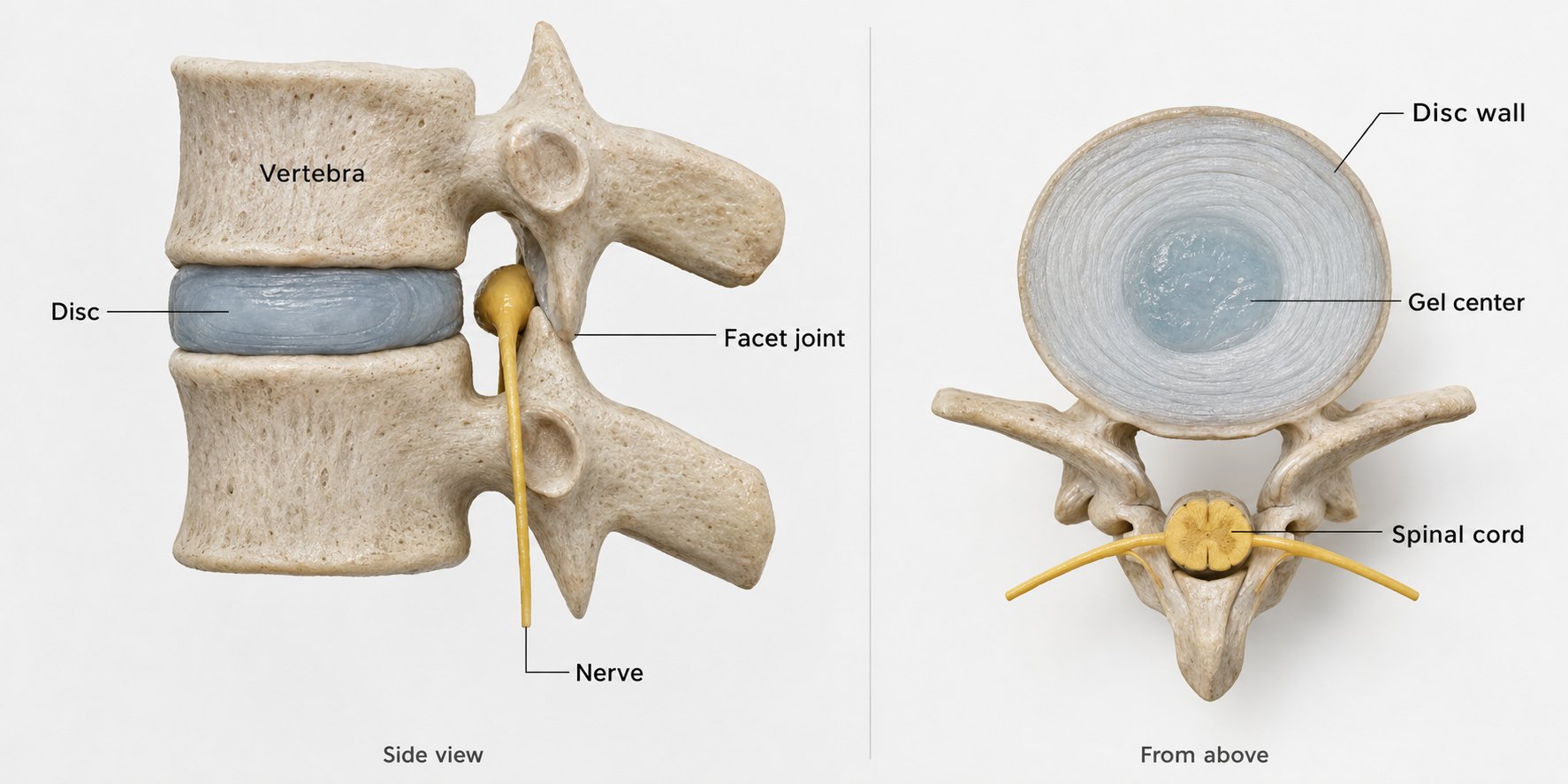
A healthy spinal segment
How it works
Each pair of vertebrae is separated by a disc: a tough outer wall wrapped around a soft, gel-like center. The disc cushions the bones and lets them move. Behind it, the small facet joints guide motion, and a spinal nerve leaves through an opening on each side.
What it allows
A healthy segment bends and twists freely without pain, and the nerve has plenty of room.
Stage 1
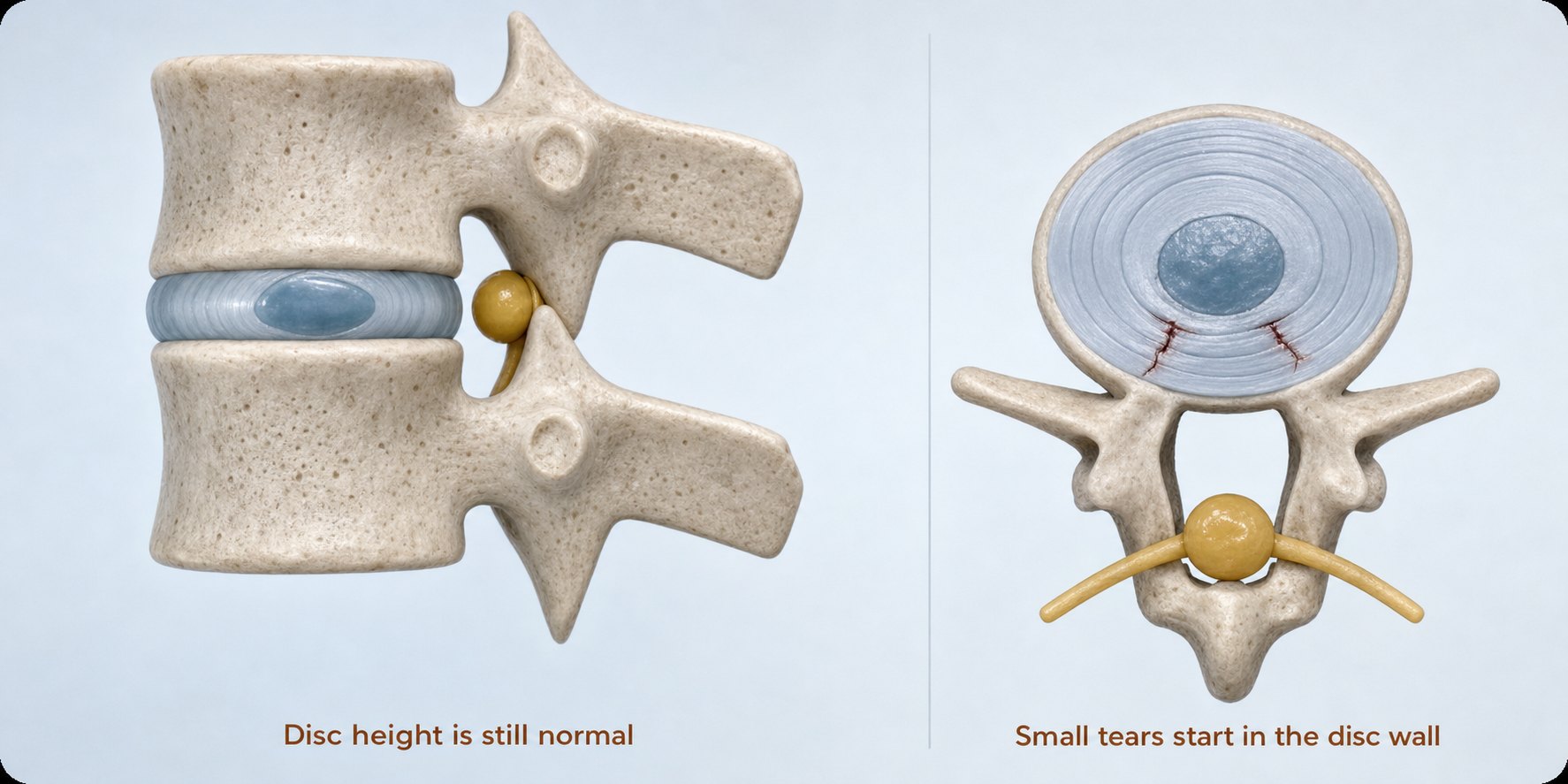
Small tears in the disc wall
What’s happening
Wear, repeated strain or an injury can cause small tears in the outer layers of the disc wall. The disc keeps its normal height, and the body starts repairing the damage with scar tissue, which is weaker than the original fibers.
What you might notice
Often nothing at all. Some people feel stiffness or a dull ache after activity that settles with rest.
Stage 2
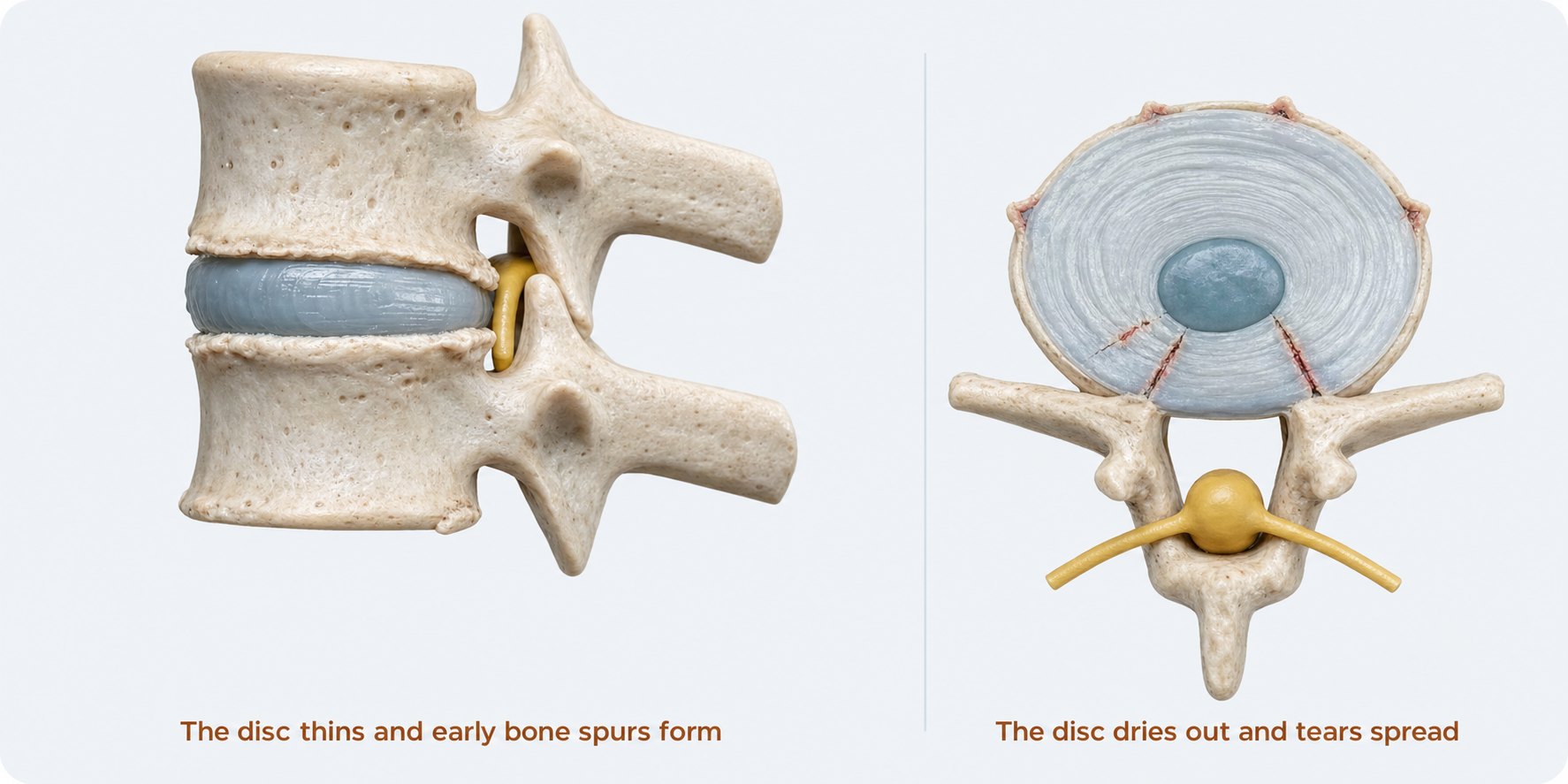
Disc thinning and early bone spurs
What’s happening
As tearing and scarring repeat, the disc slowly loses water and height. With less cushion between the vertebrae, the body lays down extra bone at their edges, forming small bone spurs (osteophytes) that help steady the segment.
What you might notice
Stiffness, especially in the morning or after sitting, and less flexibility in that part of the spine. Many people still have little or no pain.
Stage 3
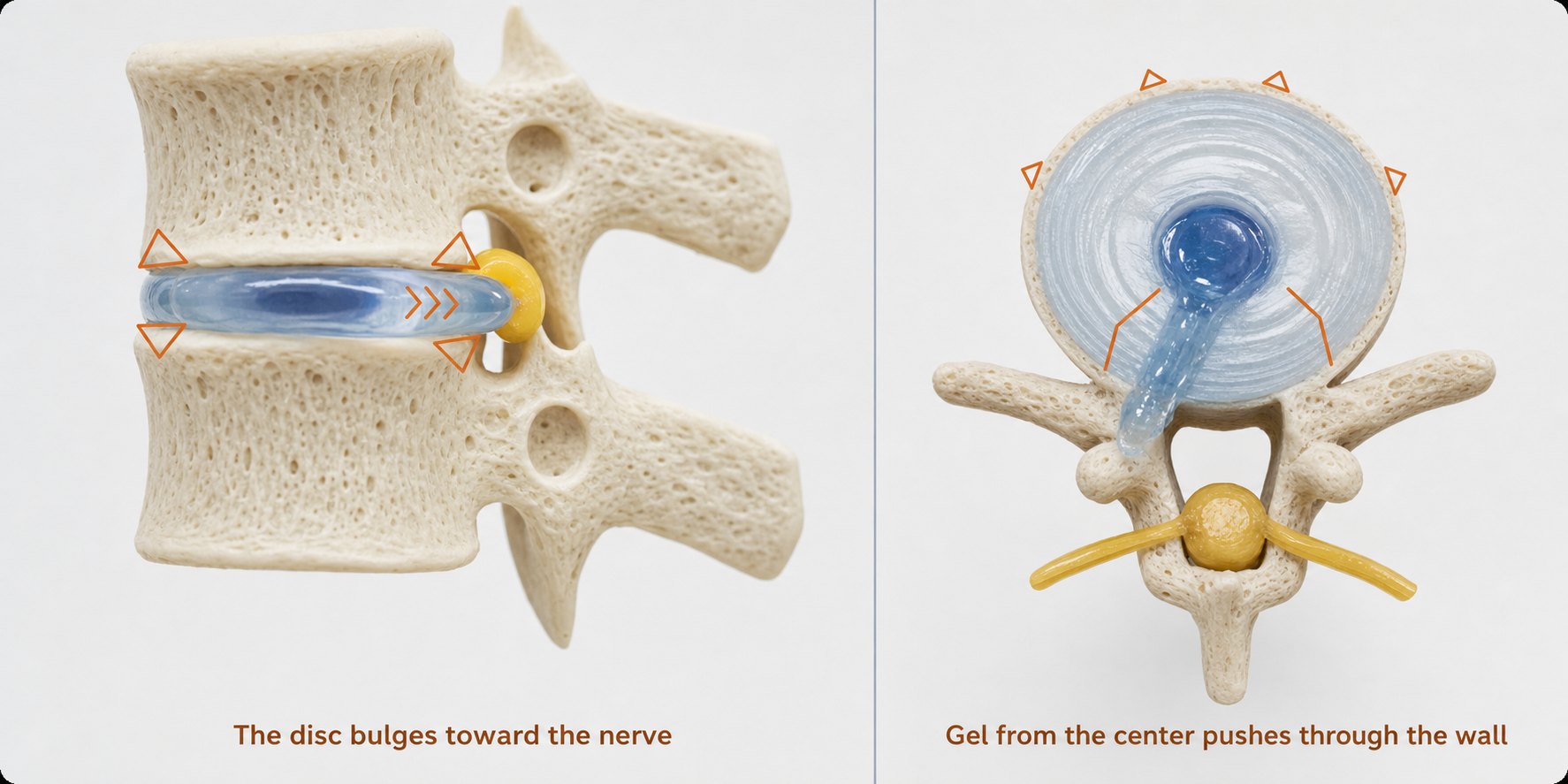
Disc bulge or herniation
What’s happening
A weakened wall can let the gel center push outward. A bulge or herniation toward the back of the disc can crowd the nearby nerve and irritate it.
What you might notice
Back or neck pain, sometimes with pain, numbness, tingling or weakness that travels into an arm or leg along the path of the irritated nerve.
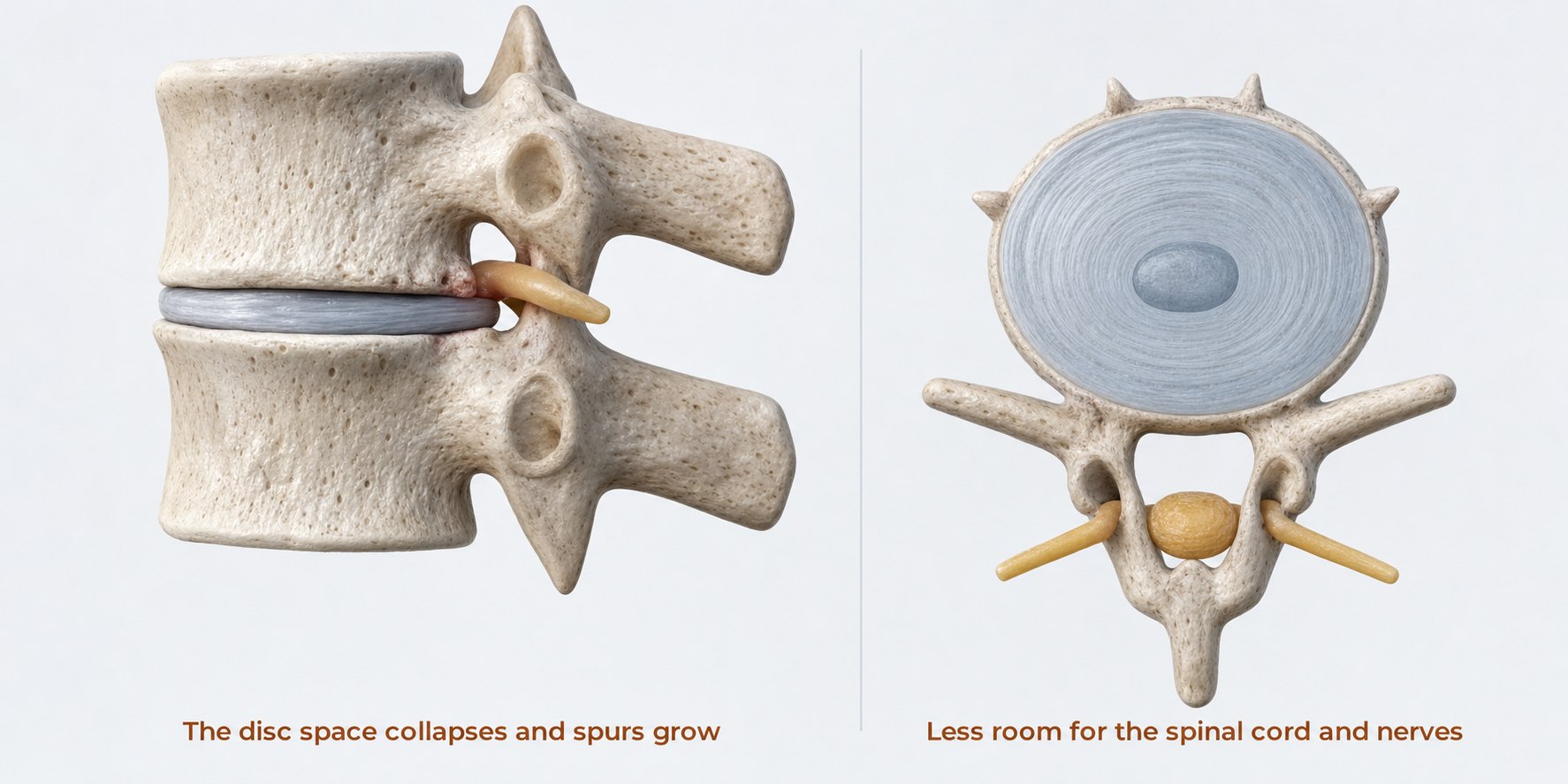
Stage 4
Advanced degeneration
What’s happening
The disc space narrows a great deal, bone spurs grow larger and the facet joints become enlarged and arthritic. Together these changes can narrow the openings for the spinal cord and nerves, a condition called stenosis.
What you might notice
Ongoing stiffness and reduced range of motion. When nerves are crowded, legs may ache or feel heavy when walking or standing, and ease when sitting or bending forward.
Every spine is different. Disc changes are a normal part of aging and show up on scans of many people who have no pain at all, and the stages don’t always follow in order. Pain that lingers, or numbness, tingling or weakness, is worth having checked.
Everyday habits
Keeping your spine healthy
You can’t stop the clock, but day-to-day habits make a real difference to how your discs and joints age.
Keep moving
Discs have little blood supply of their own and rely on movement to draw in water and nutrients. Walking and regular activity help keep them healthy.
Build core and back strength
Strong trunk and hip muscles share the load with your spine and help protect the discs during lifting and bending.
Mind your posture
Long hours slumped at a desk or behind the wheel load the discs unevenly. Our Posture Guide shows simple fixes.
Maintain a healthy weight
Every extra pound adds to the load on the discs and joints of your lower back with each step.
Don’t smoke
Smoking reduces blood flow to the tissues around the discs and is linked with faster disc degeneration.
Get symptoms checked early
Pain that lasts more than a few weeks, or that spreads into an arm or leg, is easier to address early. See how each level connects to the body on our Nerve Chart.
This page is general education, not a diagnosis. Sudden weakness, loss of bladder or bowel control, or numbness in the groin area needs urgent medical attention.