
Posture Guide
Posture guide
How you hold yourself, all day long
Your spine spends hours in the same few positions: behind the wheel, at a desk, in bed and on your feet. Choose an activity to see what supported alignment looks like and what to watch for.
Better
Supported driving
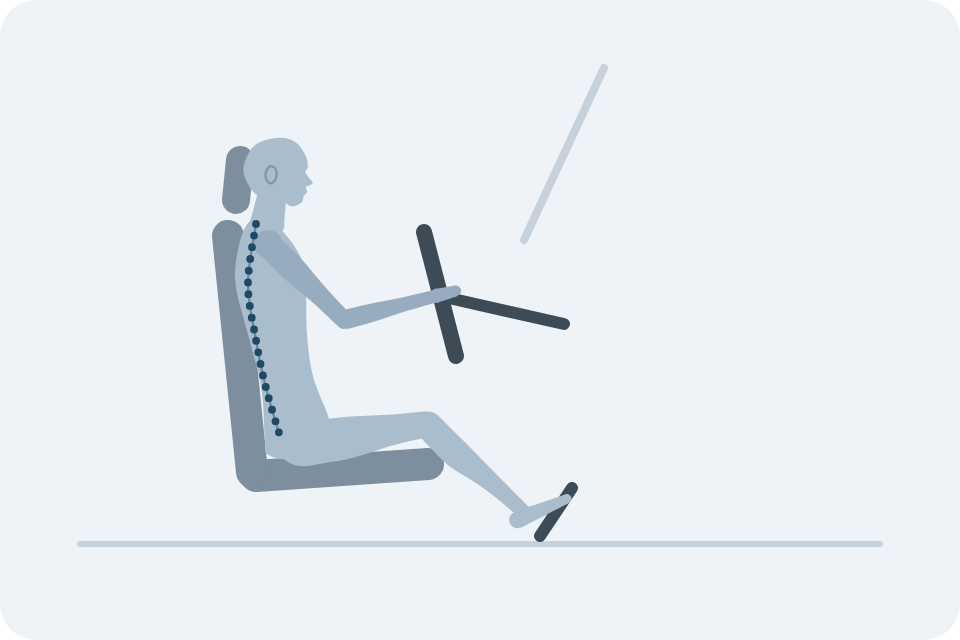
- Head level, near the headrestKeep the back of your head an inch or two from the headrest so your ears sit over your shoulders.
- Shoulders relaxed against the seatLet your shoulder blades rest on the seatback instead of hunching toward the wheel.
- Tall through the chestSit up as if lifted from the crown of your head. It keeps the upper back from curling forward.
- Core gently engagedA light draw-in of the belly helps hold your trunk steady over bumps and turns.
- Lower back supportedSlide your hips all the way back and use the lumbar support, or a small rolled towel, to fill the curve of your low back.
- Elbows and knees softly bentSit close enough to reach the wheel and pedals without locking your arms or legs.
Avoid
Slumped driving
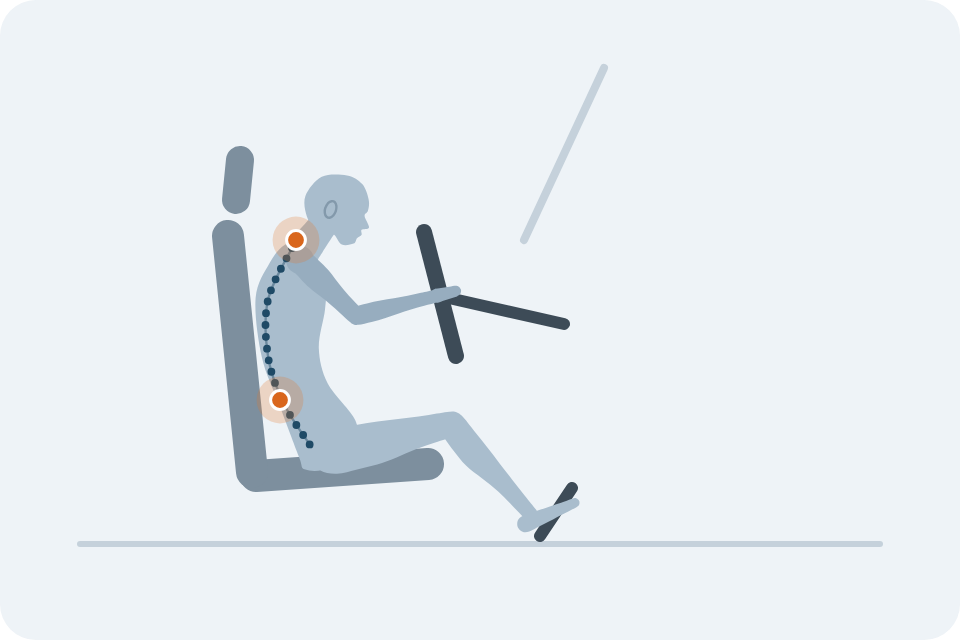
- Tilted head or bodyLeaning on the door or console holds your spine in a sideways bend for the whole trip.
- Head pushed forwardCraning toward the windshield makes your neck and shoulder muscles carry the weight of your head.
- Chin jammed backOver-correcting by pulling the chin back hard is just as tiring. Aim for a level, relaxed gaze.
- Rounded shouldersReaching for a wheel that is too far away pulls the shoulders forward and tightens the chest.
- Rounded upper backHunching over the wheel stretches and tires the muscles between your shoulder blades.
- Rounded lower backA gap between your low back and the seat lets the spine sag into a C-shape.
Road-trip tip: on long drives, stop every hour or two to get out, stand tall and walk for a few minutes.
Better
Supported sitting
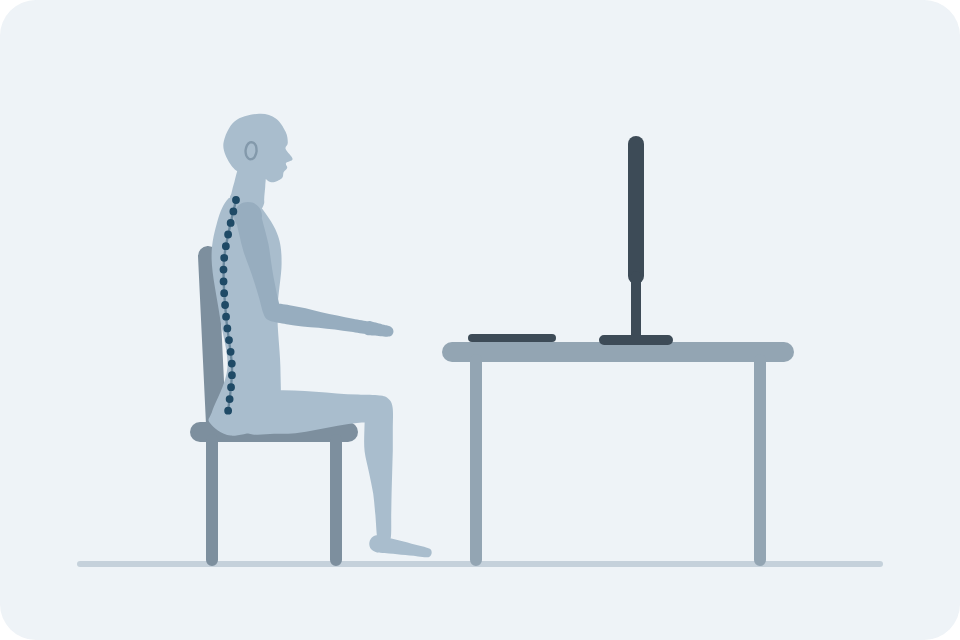
- Head balanced over shouldersEars over shoulders, with the top of the screen at or slightly below eye level.
- Shoulders back and relaxedLet your shoulders settle down and back, elbows close to your sides at about a right angle.
- Chest openSit tall so your breastbone lifts slightly. It gives your lungs room and keeps the upper back from curling.
- Core lightly engagedGently draw your belly in so your spine stays upright without your low back doing all the work.
- Back supportedSit all the way back so the chair holds the natural curve of your lower back.
- Feet flat, thighs supportedRest your feet on the floor or a footrest, with your knees about level with your hips.
Avoid
Hunched sitting
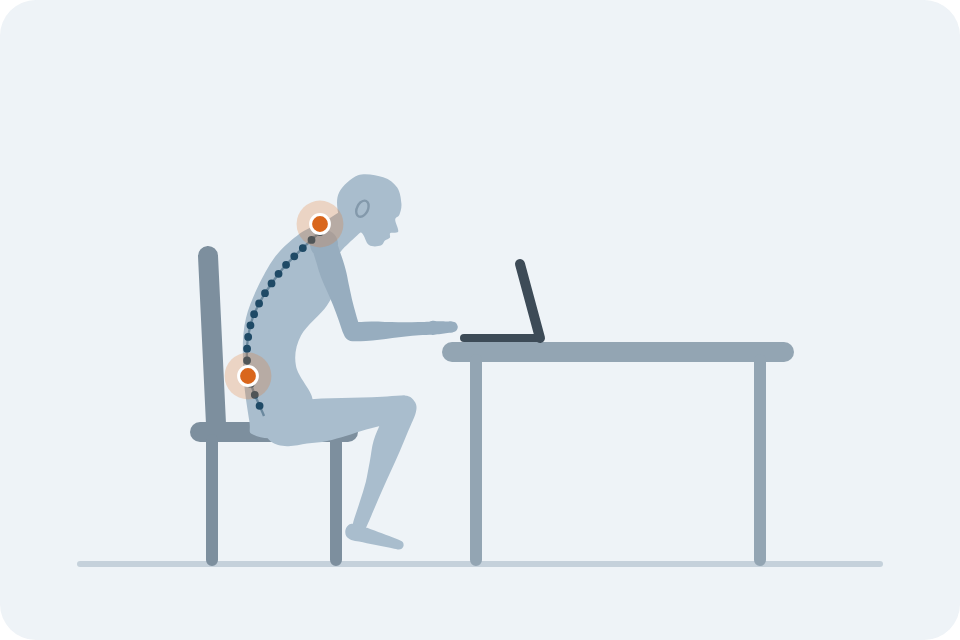
- Tilted head or bodyLeaning to one side, or toward a screen set off to the side, loads one side of the spine.
- Head pushed forwardPeering down at a low laptop or phone draws your head out in front of your body.
- Chin jammed backA stiff, tucked chin strains the front of the neck. Keep your gaze level and relaxed.
- Rounded shouldersShoulders that roll in toward the keyboard tighten the chest over time.
- Rounded upper backHunching over the desk stretches and tires the upper back.
- Rounded lower backPerching on the front edge of the seat, or sliding down in it, leaves your low back unsupported.
Desk tip: change position about every 30 minutes. Even a good posture gets tiring when you hold it too long; the best posture is your next one.
On your back
Better
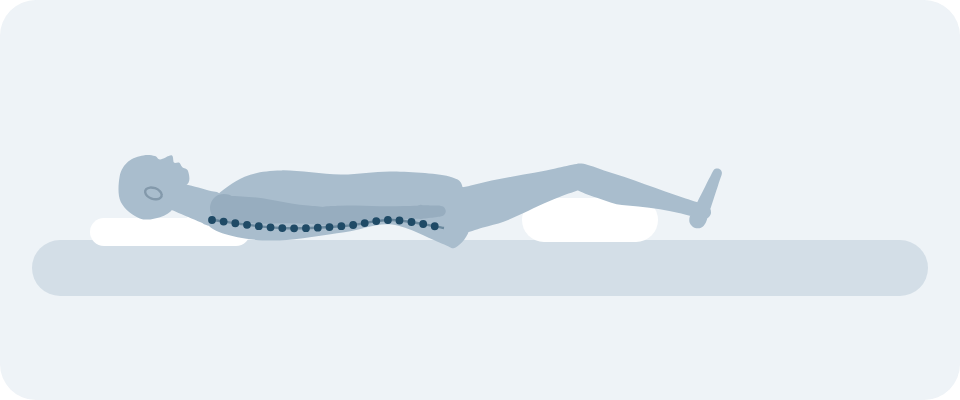
Use a pillow that supports your head and the curve of your neck, so your chin stays level instead of tipping toward your chest. A pillow under your knees softens the arch in your lower back, and a small rolled towel under the neck can add extra support.
Avoid
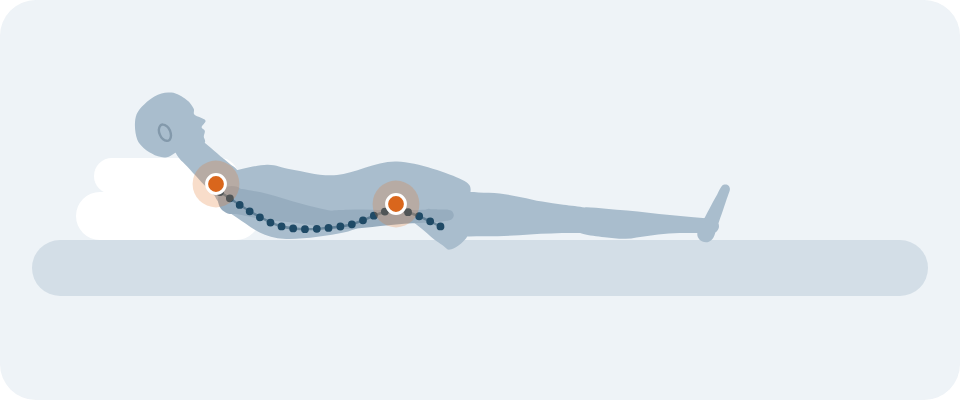
Stacked pillows push the chin toward the chest and strain the neck. Lying with your legs flat, especially on a soft mattress, can let the lower back arch and ache by morning.
On your side
Better
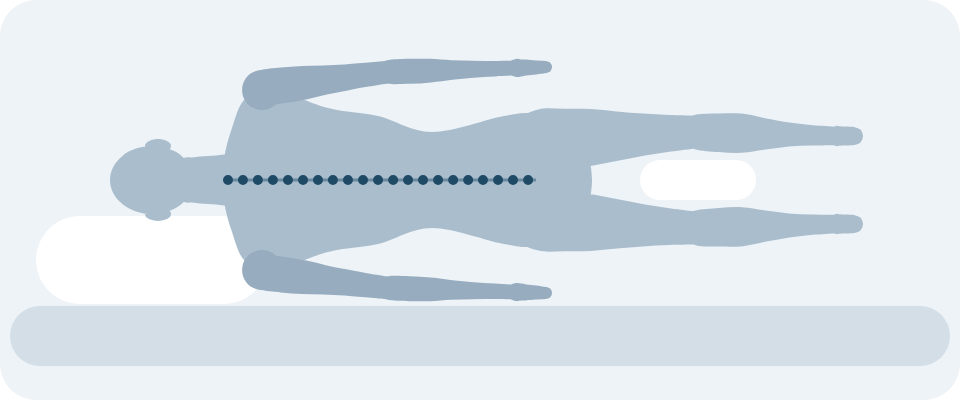
Choose a pillow thick enough to fill the space between your ear and the mattress, so your head stays level with the rest of your spine. Bend your knees slightly, tuck a pillow between them and keep your hips stacked so your pelvis doesn’t twist.
Avoid
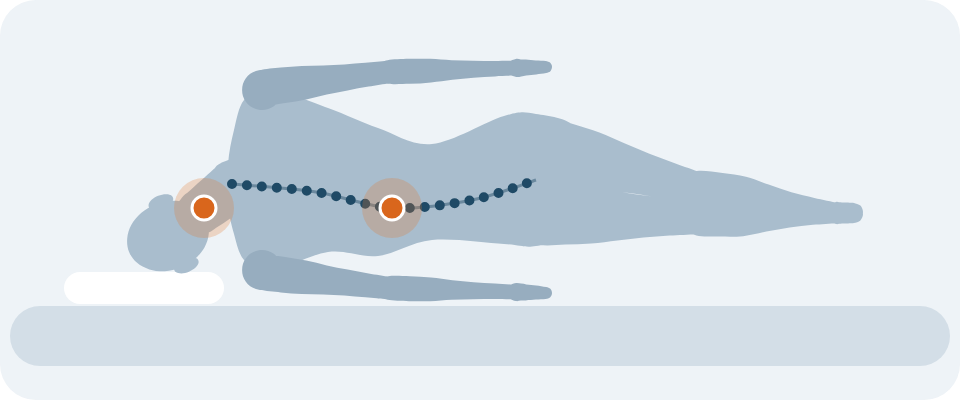
A pillow that’s too thin lets your head drop toward the mattress (one that’s too thick pushes it up). Letting the top leg fall forward rotates the pelvis and twists the lower back.
What about stomach sleeping? It keeps your head turned to one side for hours and lets the lower back sag. If it’s the only way you can fall asleep, try a very thin pillow (or none) under your head and a flat pillow under your hips.
Standing posture
What your standing posture says
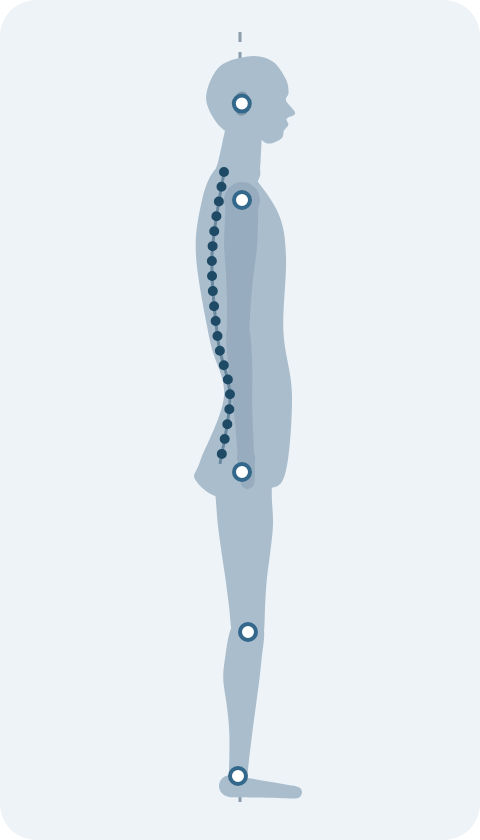
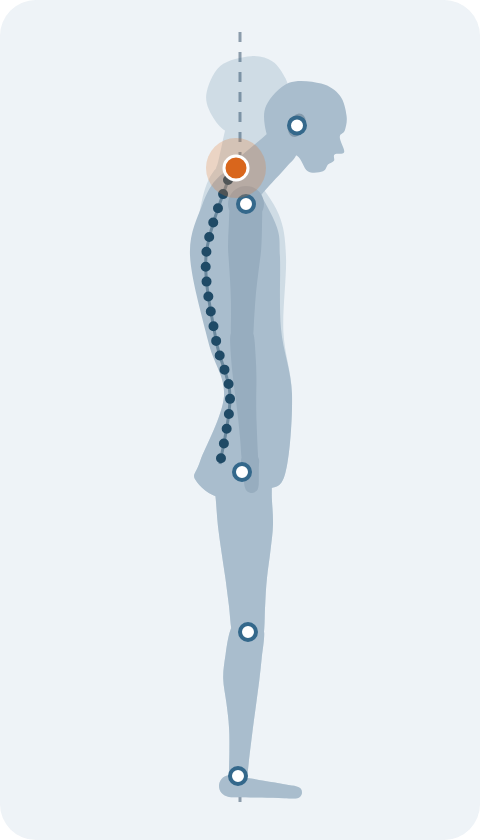
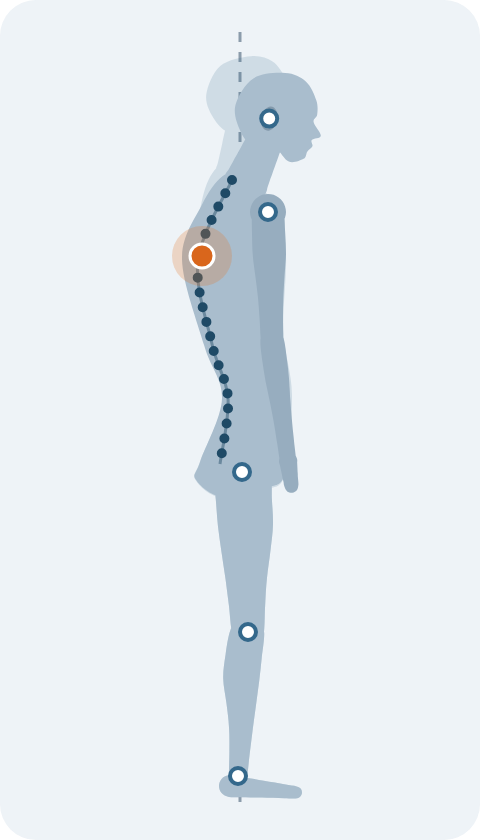
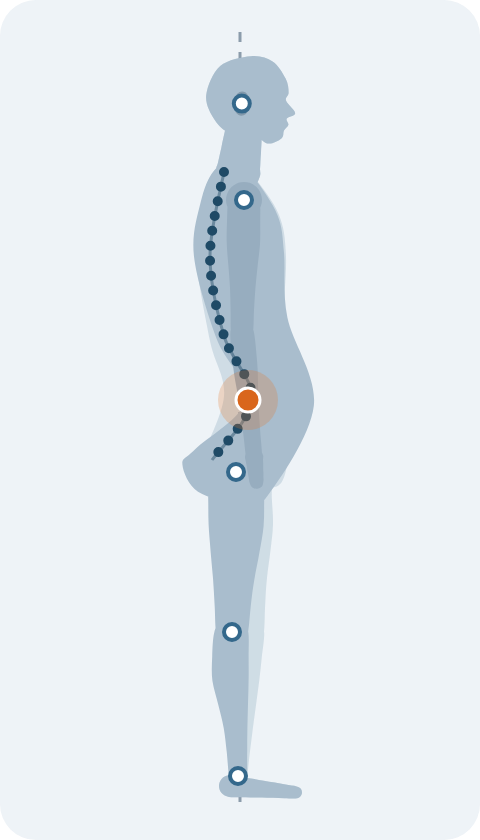
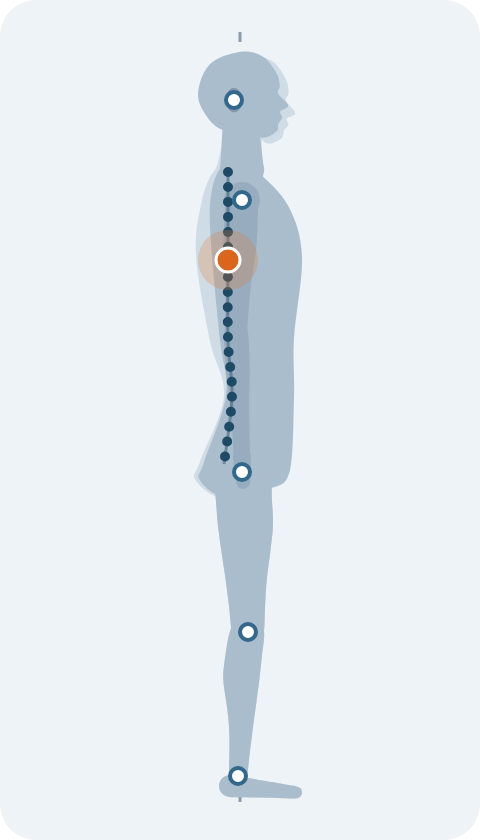
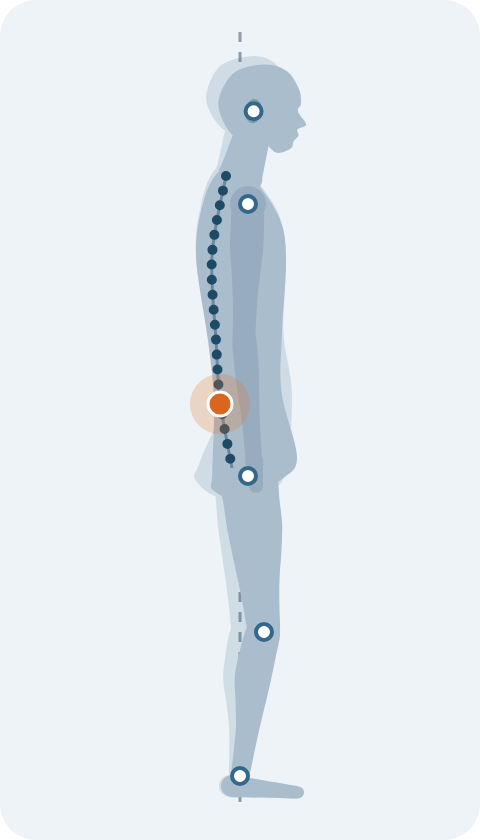
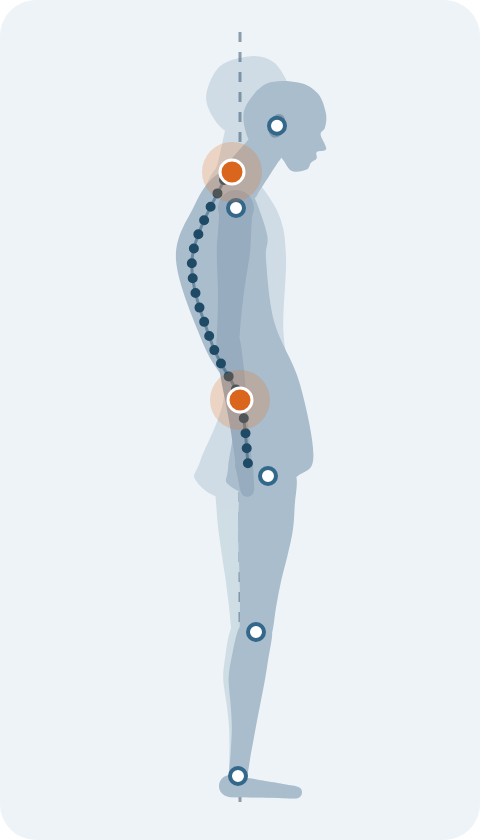
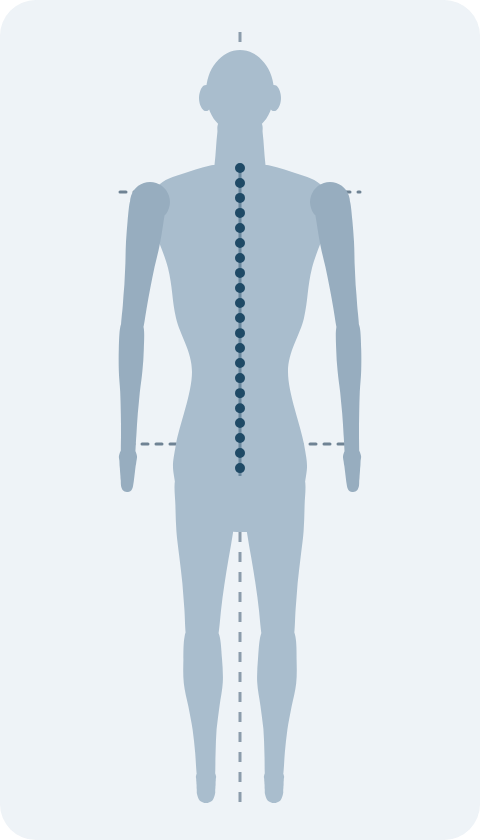
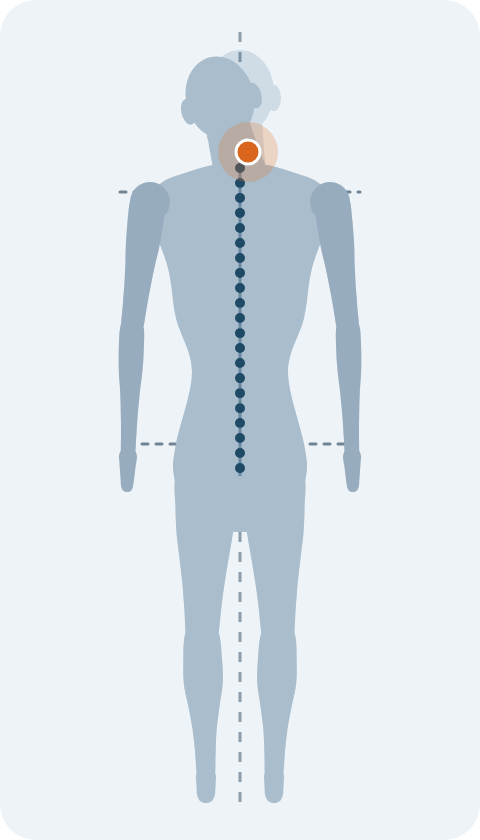
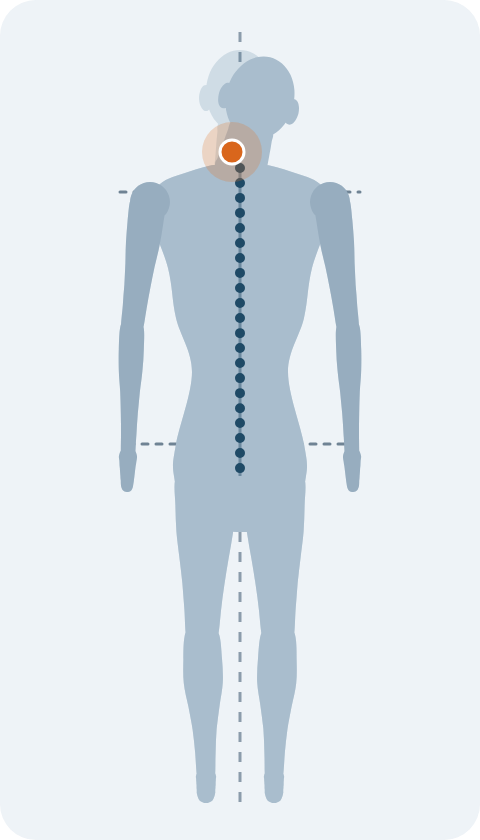
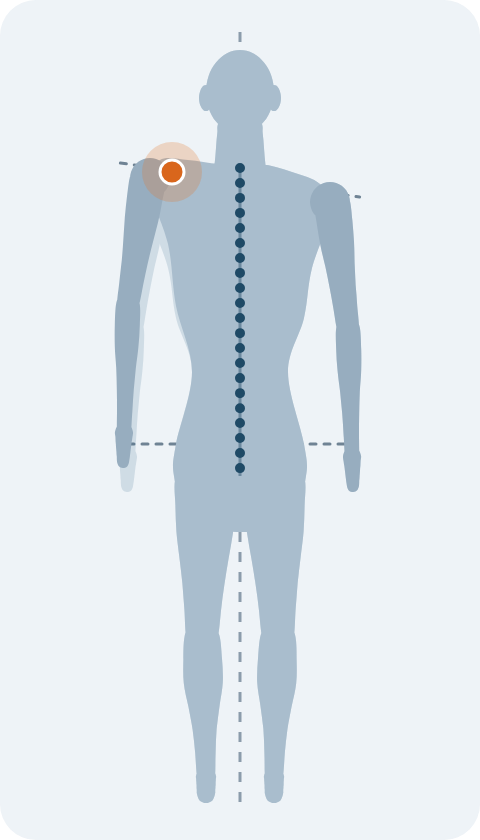
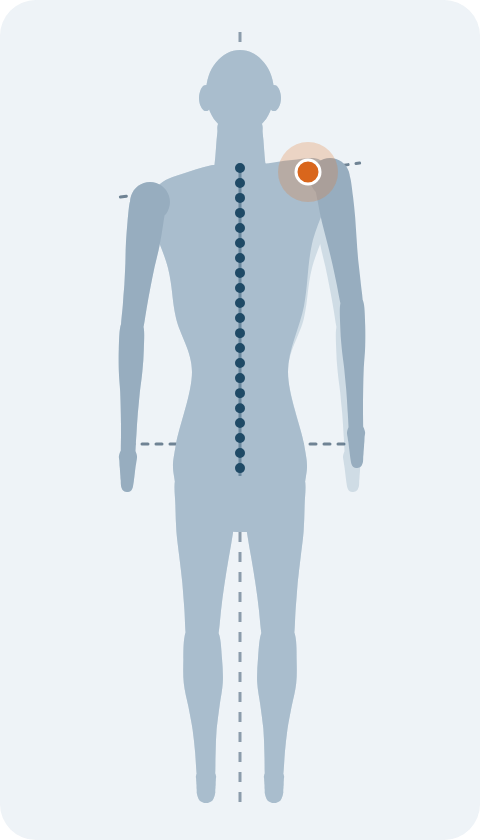
Pick a posture to compare it with neutral alignment. In each figure the faint shape is neutral posture, orange dots mark common strain areas, and the dashed lines are the plumb line (side view) or level lines (back view).
Side view
Side view
Neutral posture
Seen from the side, a straight line drops through the ear, shoulder, hip and knee to just in front of the ankle. The spine keeps three gentle curves (neck, mid back and low back) that share your body weight evenly, so no single area has to work overtime.
What supports it
Regular movement, a well set-up workstation and balanced strength in the core, back and hips all help the body settle into this position.
Keeping it
Change position often. Even good posture gets tiring if you hold it without a break.
Side view
Forward head
The head drifts in front of the shoulders, so the ear sits ahead of the plumb line. Because the head is heavy, the muscles at the back of the neck and across the upper shoulders have to hold it up all day, which can leave them tight and sore.
Often linked to
Long hours looking down at phones, laptops or paperwork; screens set too low; driving with the head pushed toward the windshield.
What can help
Raise screens to eye level, bring your phone up to your face, practise gentle chin tucks and take regular breaks to reset.
Side view
Rounded shoulders
The shoulders roll forward and in, and the upper back rounds. The chest muscles shorten while the muscles between the shoulder blades are stretched and weakened.
Often linked to
Desk and computer work, long drives, carrying heavy bags in front of you, and workouts that favour the chest over the back.
What can help
Doorway chest stretches, rowing and shoulder-blade squeeze exercises, and a workstation that lets your elbows rest close to your sides.
Side view
Hollow back
The pelvis tips forward and the lower back arches more than normal, pushing the stomach forward and the seat back. The extra curve concentrates pressure on the joints of the lower back.
Often linked to
Long periods of sitting (which tightens the hip flexors), a weak core, extra weight carried at the front of the body, pregnancy and frequent high heels.
What can help
Hip flexor stretches, core exercises such as planks and dead bugs, glute strengthening and supportive footwear.
Side view
Military back
The upper back is unusually flat and the chest is held high and rigid, as if standing at attention. With less natural curve, the spine absorbs everyday impact less well and the back muscles stay braced.
Often linked to
Trying too hard to "stand up straight", some sports and training habits, and long-standing stiffness in the mid back.
What can help
Relax rather than brace: let the shoulders settle and breathe into the belly. Mid-back mobility work and regular movement help restore the natural curves.
Side view
Flat pelvis
The pelvis tucks under and the normal curve in the lower back flattens out. The upper body often leans slightly forward and the knees stay a little bent to keep balance.
Often linked to
Tight hamstrings, long hours of slumped sitting, and weak hip and lower-back muscles.
What can help
Hamstring stretches, practising a hip hinge, and exercises that strengthen the hips and lower back.
Side view
Slumping
The hips drift forward past the plumb line while the upper body leans back and rounds, and the head juts forward. Instead of muscles doing the work, the body hangs on its ligaments and joints.
Often linked to
Fatigue, standing for long periods, a weak core and glutes, and a habit of locking the knees.
What can help
Stand with your weight even over both feet and knees soft, strengthen the core and glutes, and shift position or sit down when you tire.
Back view
- Neutral
- Head tilt left
- Head tilt right
- Raised shoulder left
- Raised shoulder right
- Mild scoliosis left
- Mild scoliosis right
- Severe scoliosis left
- Severe scoliosis right
Back view
Neutral posture
From behind, the spine runs in a straight line from the base of the skull to the pelvis. The head sits centred, and the shoulders and hips are level.
What supports it
Using both sides of the body evenly: carrying loads on both sides, switching hands for one-sided tasks and staying active.
Keeping it
Check yourself in a mirror now and then. Are your shoulders level and your head centred?
Back view
Head tilt (left)
The head leans toward the left shoulder instead of sitting centred over the spine. The muscles on one side of the neck shorten while the other side works to hold the head up.
Often linked to
Cradling a phone between ear and shoulder, a monitor set off to one side, a pillow that is too high or too low, and old neck injuries.
What can help
Keep screens straight ahead, use a headset for calls, check your pillow height, and gently stretch the tight side of the neck.
Back view
Head tilt (right)
The head leans toward the right shoulder instead of sitting centred over the spine. The muscles on one side of the neck shorten while the other side works to hold the head up.
Often linked to
Cradling a phone between ear and shoulder, a monitor set off to one side, a pillow that is too high or too low, and old neck injuries.
What can help
Keep screens straight ahead, use a headset for calls, check your pillow height, and gently stretch the tight side of the neck.
Back view
Raised shoulder (left)
The left shoulder sits higher than the right. This is often muscular, with the upper shoulder muscle on that side staying tense, but it can also reflect a curve in the spine below.
Often linked to
Carrying a bag or a child on the same side, one-handed tasks such as using a mouse, and stress held in the shoulders.
What can help
Switch sides or use a two-strap backpack, bring your mouse closer, and build shoulder relaxation and stretching into your day.
Back view
Raised shoulder (right)
The right shoulder sits higher than the left. This is often muscular, with the upper shoulder muscle on that side staying tense, but it can also reflect a curve in the spine below.
Often linked to
Carrying a bag or a child on the same side, one-handed tasks such as using a mouse, and stress held in the shoulders.
What can help
Switch sides or use a two-strap backpack, bring your mouse closer, and build shoulder relaxation and stretching into your day.
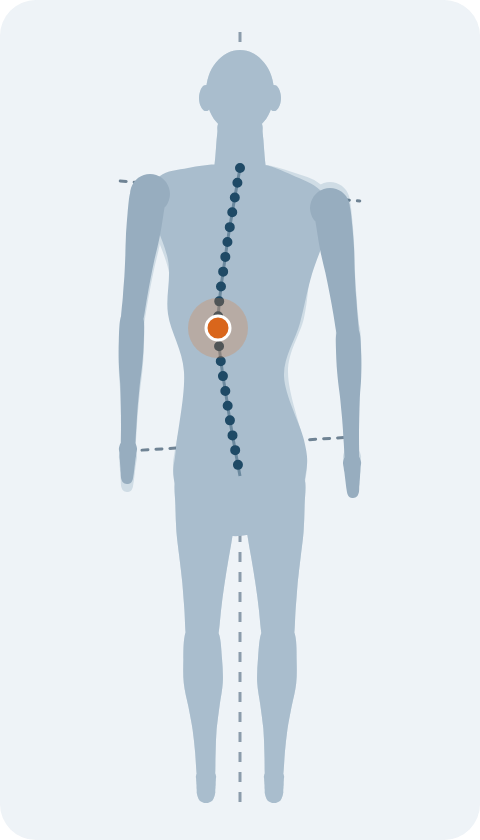
Back view
Mild scoliosis (left)
A slight sideways curve in the spine, bowing toward the left. Mild curves are common and often painless, but can show up as uneven shoulders, an uneven waistline or one hip sitting higher.
Often linked to
Most cases have no known cause, and some run in families. A curve can also be functional, coming from a leg-length difference or a muscle imbalance.
What can help
Have it assessed so it can be measured and monitored, especially in children and teens who are still growing. Staying active and building core strength support the spine.
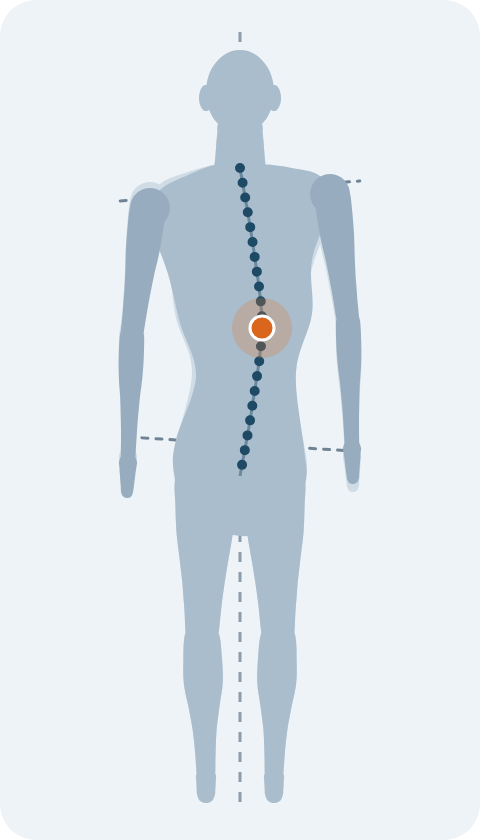
Back view
Mild scoliosis (right)
A slight sideways curve in the spine, bowing toward the right. Mild curves are common and often painless, but can show up as uneven shoulders, an uneven waistline or one hip sitting higher.
Often linked to
Most cases have no known cause, and some run in families. A curve can also be functional, coming from a leg-length difference or a muscle imbalance.
What can help
Have it assessed so it can be measured and monitored, especially in children and teens who are still growing. Staying active and building core strength support the spine.
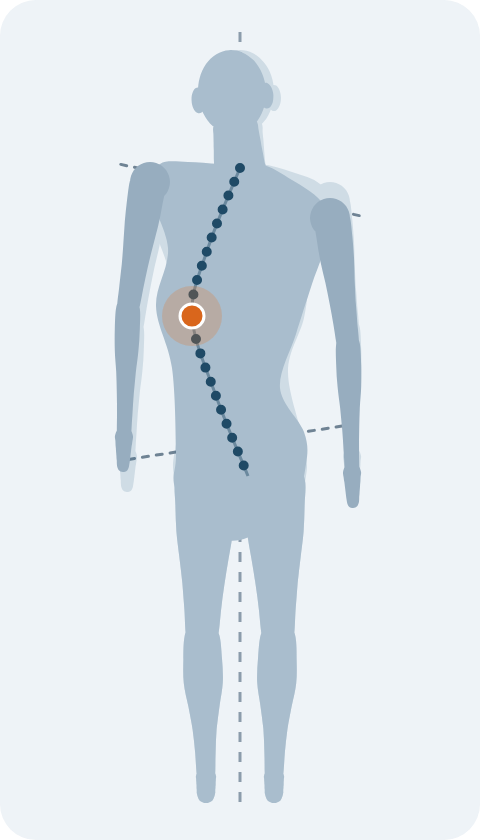
Back view
Severe scoliosis (left)
A more pronounced sideways curve, here bowing toward the left, often with visible rotation of the ribs or shoulder blades. Larger curves can affect comfort and movement and, in rare cases, breathing.
Often linked to
Usually idiopathic, meaning there is no known cause. It is most often noticed during growth spurts in the pre-teen and teen years.
What can help
Larger curves should be evaluated and monitored by a physician or spine specialist. Exercise, bracing and chiropractic care may each play a part in a coordinated plan.
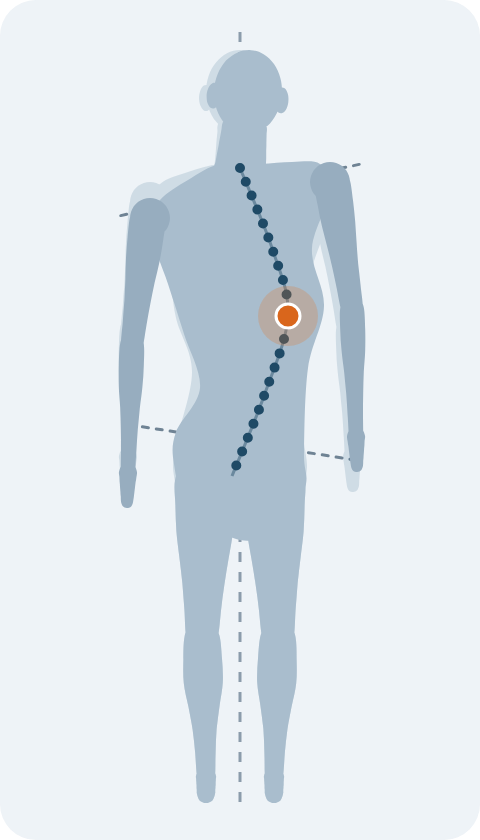
Back view
Severe scoliosis (right)
A more pronounced sideways curve, here bowing toward the right, often with visible rotation of the ribs or shoulder blades. Larger curves can affect comfort and movement and, in rare cases, breathing.
Often linked to
Usually idiopathic, meaning there is no known cause. It is most often noticed during growth spurts in the pre-teen and teen years.
What can help
Larger curves should be evaluated and monitored by a physician or spine specialist. Exercise, bracing and chiropractic care may each play a part in a coordinated plan.
This guide is general education, not a diagnosis. If you have ongoing pain, numbness or tingling, or a curve that seems to be changing, have it checked.