
Accidents & Injuries
How Injuries Can Lead to Subluxations
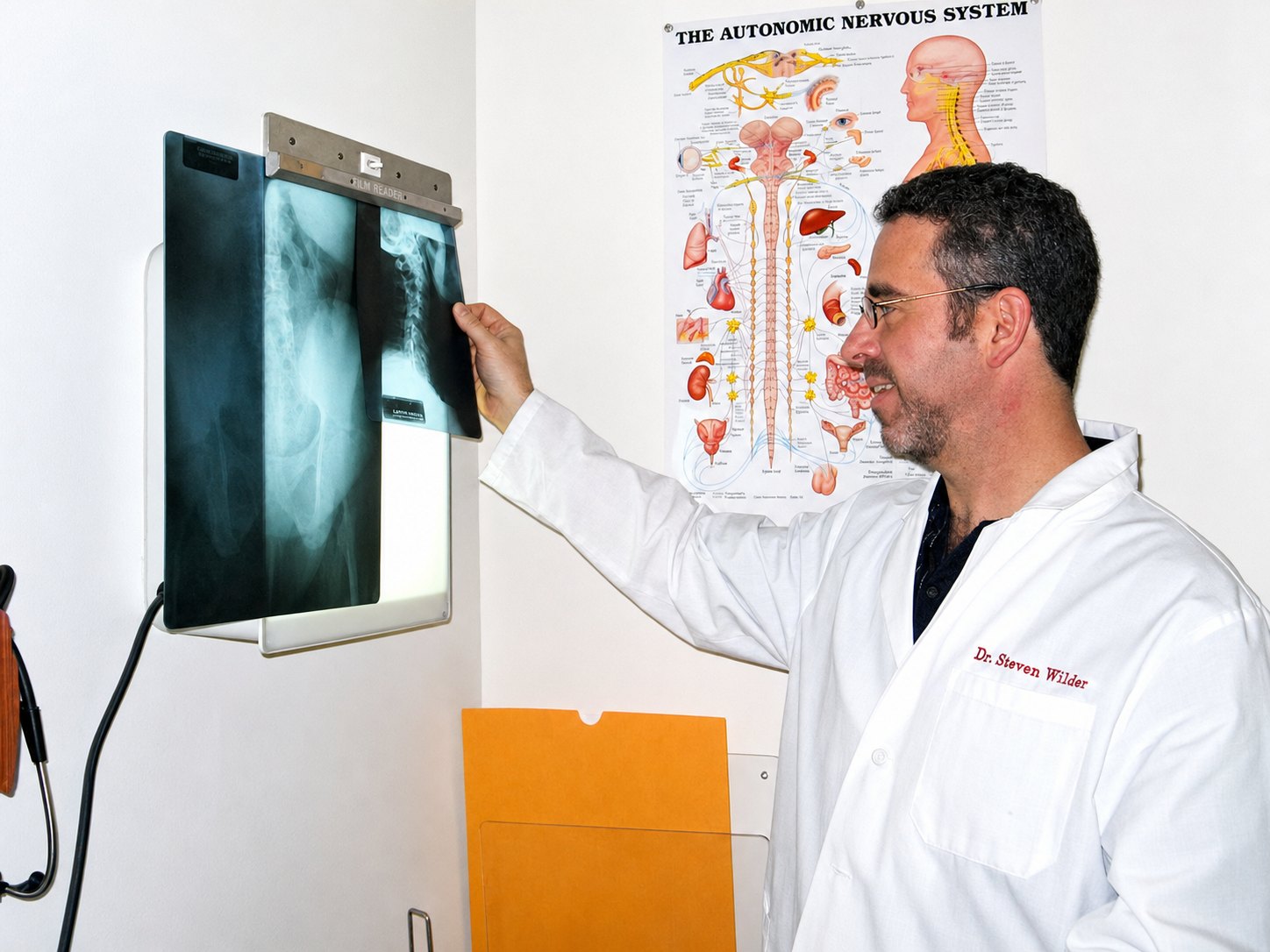 Whenever your body goes through a trauma, its structural balance can be thrown off or damaged, which may lead to small misalignments known as subluxations. These subtle distortions put unusual stress on the body. That stress can pinch, stretch or compress nerves, which in turn can affect your muscles, internal organs, glands, discs, bones and even your brain.
Subluxations may contribute to a general breakdown in how the body works, or what chiropractors call “dis-ease.” This state can show up as fatigue, premature aging, arthritic changes, muscle weakness and changes in how your internal organs function.
Small Accidents Still Matter
A subluxation doesn’t require a major accident. A simple fall, a bump, a jolt, a shake-up or a whiplash injury can all set one in motion. Many chiropractic patients discover later in life that an injury from childhood is behind the discomfort or distress they feel today. Walking away from an injury without a broken bone doesn’t mean your body escaped significant trauma.
Millions of people leave the emergency room believing all is well when that may not be the whole story. Hidden distortions in the body’s normal structure, if left unaddressed, can lead to problems down the road.
Car Crashes and Other Serious Accidents
We want to be clear that we fully support necessary medical care. In an emergency, doctors must do everything they can to save life and limb. Once serious injuries have been treated, the healing process begins, and that is where chiropractic care may help you return to health more quickly. Time and again, we have seen the remarkable healing ability of the human body. Chiropractic aims to support that natural healing by clearing away the obstacles that stand in its way.
Lingering Physical and Emotional Effects After an Accident
Many people struggle for years after a serious accident, often relying on medication to manage pain and discomfort. Conditions that can follow an accident include pain or spasms in the neck, shoulders, arms, wrists, hands, legs, back and face. Scoliosis (a sideways curving and twisting of the spine) has even been reported after significant trauma. Changes in personality are also common after a traumatic event.
Reported symptoms include insomnia, mental dullness, nervousness, anxiety, depression, constipation, diarrhea, headache, hearing problems, and even epilepsy, allergies and dizziness. Other symptoms seen after trauma can include asthma, bed-wetting, vomiting, low energy, incontinence, urinary tract infections, vision problems, blindness and even hyperactivity in children. There are reports of people with each of these symptoms finding improvement with chiropractic care, though individual results vary.
Injuries on the Job
Consider these facts:
- Back pain leads to more lost work time and higher treatment costs than any other health problem.
- Neck and back injuries make up more than 90% of work injuries.
- Chiropractic care may help injured workers get out of pain and back on the job quickly, often at a lower treatment cost than other types of care.
Our staff can complete claim forms and process your claim for you. If you need time away from work, we can stay in touch with your employer so they understand that you plan to return as soon as you can safely do your job.
After a work injury, seeing a chiropractor matters not only for relieving pain but also for rehabilitating the injured area. Without the right care, an on-the-job injury is more likely to come back later.
How Often Do Workplace Injuries Happen?
Musculoskeletal disorders, whatever their cause, rank among the most common medical problems. They affect 7% of the population and account for 14% of physician visits and 19% of hospital stays. Looking only at cases that involved days away from work, the Bureau of Labor Statistics reported that in 1994, roughly 32% of all illness cases stemmed from overexertion or repetitive motion, a figure that includes back injuries.
The Bottom Line
If you have been through a significant trauma or an accident of any kind, whether mild or severe, recent or years ago, we encourage you to visit our office to have your structural system checked for nerve pressure caused by subluxations. For many people, chiropractic adjustments can play an important part in moving from a life limited by pain, disability or illness toward recovery, activity and better health.
Sources:
Lantz CA. The vertebral subluxation complex. International Review of Chiropractic. September/October 1989; 37-61.
Lantz CA. The vertebral subluxation complex part 1. An introduction to the model and the kinesiological component. Chiropractic Research Journal. 1989; 1(3); 23-36.
Lantz CA. The vertebral subluxation complex part 2. The neuropathological and myopathological components. Chiropractic Research Journal. 1990; 1(4); 19-38.
Bracker MD, Ralph L.P. The numb arm and hand. Am Family Phys. 1995;51(1):103-116.
Fortinopoulos V. Scoliosis and subluxation. Int’l Chiro Ped Assn. July/August 1999.
Mumenthaler M. Headache in chronic acceleration injury of the cervical spine. Schweizer Archiv für Neurologie und Psychiatrie. 2006; 157(4):163-168.
Gukelberger M. The uncomplicated post-traumatic cervical syndrome. Scand J Rehabilitative Med. 1972;4:150-153.
Di Stefano G, Radanov BP. Course of attention and memory after common whiplash. Acta Neurol Scand. 1995; 91:346-352.