
The Human Spine
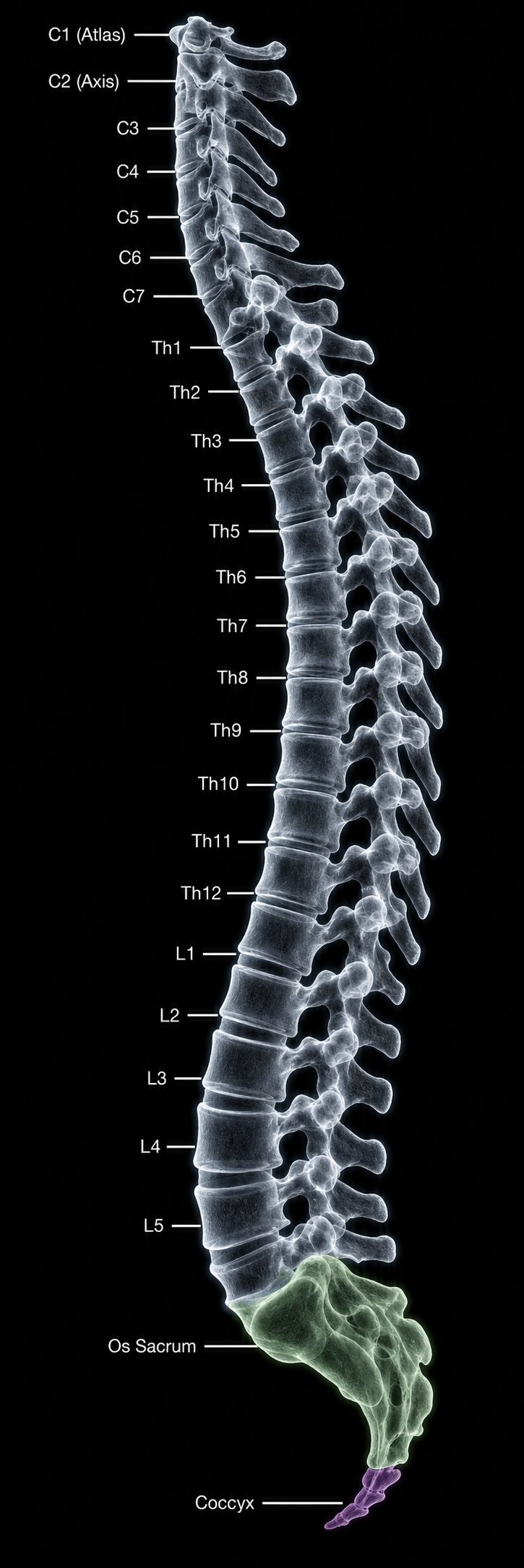
Cervical Spine (Neck)
C1 (Atlas): Blood supply to the head, pituitary gland, scalp, bones of the face, brain, inner and middle ear, sympathetic nervous system
C2 (Axis): Eyes, optic nerve, auditory nerve, sinuses, mastoid bones, tongue, forehead
C3: Cheeks, outer ear, bones of the face, teeth, trifacial nerve
C4: Nose, lips, mouth, eustachian tube, mucous membranes
C5: Vocal cords, glands of the neck, pharynx
C6: Muscles of the neck, shoulders, tonsils
C7: Thyroid gland, bursae of the shoulders, elbows
Thoracic Spine (Upper and Mid-Back)
T1: Arms from the elbows down, esophagus, trachea
T2: Heart (including its valves and covering), coronary arteries
T3: Lungs, bronchial tubes, pleura, chest, breasts, nipples
T4: Gallbladder and common duct
T5: Liver, solar plexus, blood
T6: Stomach
T7: Pancreas, islets of Langerhans, duodenum
T8: Spleen, diaphragm
T9: Adrenal (suprarenal) glands
T10: Kidneys
T11: Kidneys, ureters
T12: Small intestines, fallopian tubes, lymph circulation
Lumbar Spine (Lower Back)
L1: Large intestine (colon), inguinal rings
L2: Appendix, abdomen, upper leg
L3: Sex organs (ovaries or testicles), uterus, bladder
L4: Prostate gland, muscles of the lower back, sciatic nerve
L5: Lower legs, ankles, feet, toes, arches
Sacrum: Hip bones, buttocks
Coccyx: Rectum, anus
This chart follows the traditional chiropractic nerve chart, which links each level of the spine with the body areas reached by nerves that leave nearby. These links describe nerve pathways; they don’t mean that a problem at one level causes a problem in a particular organ.